This project is the first in Latin America to test carbon capture, movement, and storage in a saline reservoir.
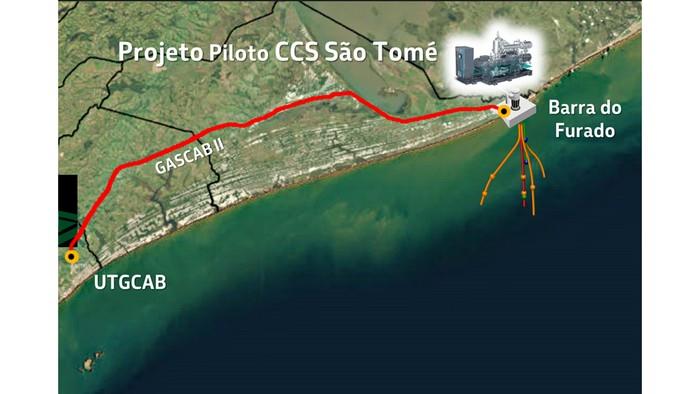
Petrobras has signed a contract for the drilling and completion of four onshore wells at the Barra do Furado Station (EBAF), in Quissamã (RJ) . The wells - one vertical injector and three directional monitoring wells - are part of the infrastructure of the São Tomé CCS Pilot Project , the first in Latin America for capturing, moving and storing carbon dioxide (CO2) in a saline reservoir from industrial sources.
The contract signed with Halliburton Produtos Ltda represents a concrete step in the implementation of the project and in Petrobras' strategy to contribute to the ambition of carbon neutrality by 2050.
The goal of the CCS (Carbon Capture and Storage) pilot project is to test and validate a range of technologies while capturing up to 100,000 tons of CO2 per year for three years. Drilling and well completion, along with all necessary infrastructure, will be finished by 2028.
In 2029, Petrobras will begin the operational phase, followed by three years of oil injection and another three years of reservoir monitoring.
TECHNOLOGICAL PIONEERING AND INNOVATION
The São Tomé Carbon Storage Center (CCS) is the first pilot project in the country to transport CO2 via pipeline and store it in a saline reservoir. The project is a Research, Development and Innovation (R&D&I) initiative that paves the way for regulatory bodies, such as the National Agency of Petroleum, Natural Gas and Biofuels (ANP) and the State Environmental Institute (INEA), to monitor and validate, in a real-world environment, procedures and standards relevant to the CCS value chain. The applied technologies can contribute to an important regulatory advancement regarding geological carbon storage in future commercial projects in the country.
The project also features innovations such as: fiber optic coating for real-time monitoring of the CO2 plume; a reservoir sampling system that eliminates the need for well intervention; special CO2-resistant materials; and fiberglass coating on the monitoring well, enabling the use of nuclear magnetic resonance for data recording.
Source: Petrobras