TGS has completed a multi-year reservoir characterization project across 13 U.S. basins, providing formation-level petrophysical interpretations to model reservoir performance and assess CO2 storage feasibility.
The project delivers a comprehensive dataset resource and integrated geological frameworks that incorporate petrophysical properties, stratigraphy, and test data to enable advanced, multivariate analysis for robust decision-making for energy strategies. When combined with other TGS solutions such as Well Performance and Well Economics datasets, this resource delivers a comprehensive view of asset potential, supporting decisions from permitting and development through performance optimization and eventual abandonment.
The completed basins include: Gulf Coast, Central Gulf Coast–Haynesville, East Gulf Coast, Appalachia, Illinois, Michigan, Uinta, Piceance, Paradox, Greater Green River, Wind River, Powder River, and Greater Williston. Together, these regions represent critical areas for both conventional and emerging energy strategies.
Project Highlights:
- 48,000+ wells analyzed with full petrophysical interpretation calibrated to core data for maximum accuracy
- Integrated stratigraphic frameworks across 340 formations were evaluated, delivering basin-wide geological consistency and detailed reservoir characterization for cross-basin comparisons
- Over 3,700 regional property maps covering petrophysical attributes like porosity, permeability, pressure, and CO2 storage capacity trends for major reservoirs
- Advanced data integration including inferred curves, bottom-hole temperatures, core, and wireline formation tests for robust modeling and calibration
David Hajovsky, Executive Vice President of Multi-Client at TGS, stated 'Our customers demand precision and scalability, and this dataset delivers both. With over 48,000 wells, 340 formations, and thousands of property maps calibrated to core, temperature, and pressure data, we’ve created a resource that integrates seamlessly into existing workflows and accelerates evaluations across multiple energy strategies.'
Built for technical rigor and scalability, this dataset supports increasing pressure to make faster, more informed decisions in a complex subsurface environment by delivering integration-ready data for workflows ranging from conventional exploration to carbon capture and storage planning. This dataset positions TGS at the forefront of subsurface intelligence, delivering the foundation for next-generation multivariate analytics that will drive smarter exploration, optimize carbon storage strategies, and support the industry’s needs as operators navigate the future of energy.
For more information on the dataset and how TGS' data can enhance your exploration or carbon storage strategy, please contact us at WDPSales@tgs.com or visit https://www.tgs.com/well-data-products/geological-data.

Figure 1. U.S. Interpretation Basins.
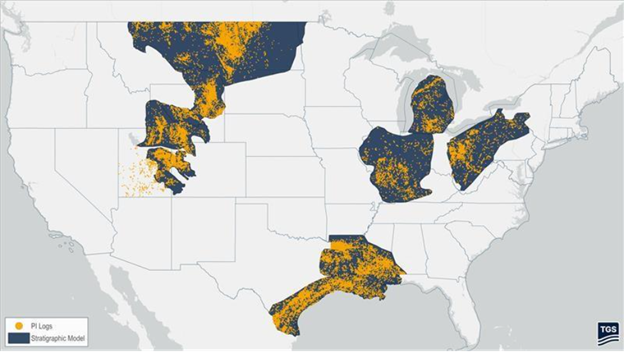
Figure 2. U.S. coverage of 48,000+ stratigraphic and petrophysical interpretation wells across 13 basins for this initiative.
Source: TGS