International Stillstrom-led consortium secures €5 million EU Horizon funding for offshore vessel charging pilot in Denmark.
Eight partners to pilot new offshore charging technology delivering power to vessels at anchor outside Skagen
An international consortium led by Stillstrom by Maersk has secured €5 million from the European Union’s flagship Horizon Europe research and innovation programme. The funding will be used for project SPARK, to develop and demonstrate offshore charging infrastructure for stationary vessels at anchor with their engines running.
Bringing together eight partners across five countries, the three-year project will deploy and test a pilot Offshore Power Zone solution in Skagen, Denmark - one of Northern Europe’s busiest anchorage hubs - targeting greenhouse gas (GHG) emissions generated by idling ships between operations.
Integrated vessel charging technology specialist Stillstrom will spearhead the project, working alongside its partners Aalborg University, DNV, Maersk, MARIN, Port of Malta, Port of Skagen and University College London.Together, the consortium combines expertise across vessel operations, port infrastructure, research, simulation training and regulatory frameworks to design, build and validate a scalable offshore power system.
Once established, the Offshore Power Zone will enable vessels to plug into an at-sea power point with electricity provided via the nearby Port of Skagen. The pilot will initially support a single ship connection to prove the concept in a live operational environment, with the ambition to use the learnings to replicate and expand the solution globally.
Near shore idling vessels represent a significant and often overlooked source of GHG emissions, making them a clear and immediate opportunity for decarbonisation. We are grateful for the opportunity to collaborate through this €5 million Horizon Europe programme, which reflects strong confidence in the potential of our technical and operational capabilities. Project SPARK brings together partners from across the maritime ecosystem, enabling us to collectively accelerate offshore power from concept to real-world deployment, delivering a practical and economical solution for the maritime sector.
Kristian Borum Jørgensen, CEO at Stillstrom
In parallel with technical delivery, the project will assess commercial viability and regulatory pathways to support wider adoption across the maritime industry.
This is a significant opportunity for Skagen as one of Northern Europe’s key anchorage hubs. By hosting this pilot Offshore Power Zone, we are helping to demonstrate how collaborative innovation can directly reduce emissions from idling vessels and support the industry’s transition to cleaner operation. It also brings opportunities for local employment and skills development as new infrastructure is deployed and tested in the port environment.
Willy B. Hansen, CEO at Port of Skagen
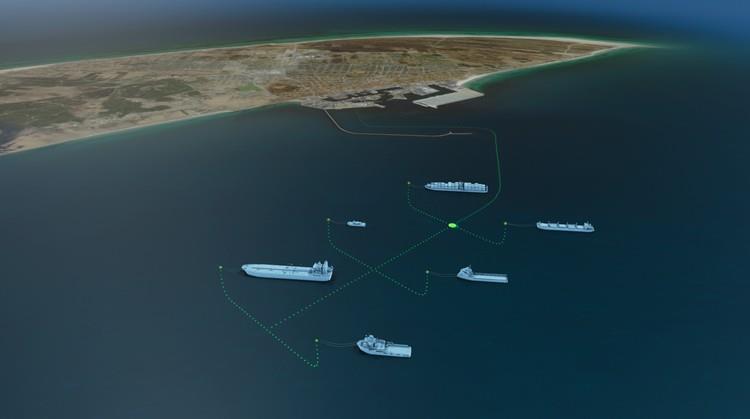
The Offshore Power Zone project will commence next month (June) with an expected 36 months’ duration.
About Horizon Europe and the consortium
Horizon Europe is the European Union’s flagship research and innovation funding programme (2021–2027), with a budget of around €95.5 billion. It aims to strengthen Europe’s scientific and technological base, boost competitiveness and growth, and support collaboration between industry, academia and governments to address major global challenges such as climate change, energy transition and sustainability, while turning research into practical solutions and new technologies.
The consortium partners in alphabetic order:
- Aalborg University, Department of Energy, Esbjerg, Denmark (research)
- DNV (regulatory framework)
- Maersk (vessel owner)
- MARIN (simulation, training, VR)
- Port of Malta (feasibility/replication study)
- Port of Skagen (deployment location)
- Stillstrom (lead role)
- University College London, Mechanical Engineering Department, UK (research)
(The UK and Norway are included as non-EU partners.)
Source: Stillstrom