
A new international review has shed light on how offshore energy structures - from oil and gas platforms to wind turbines - shape marine ecosystems and the benefits they provide to society.
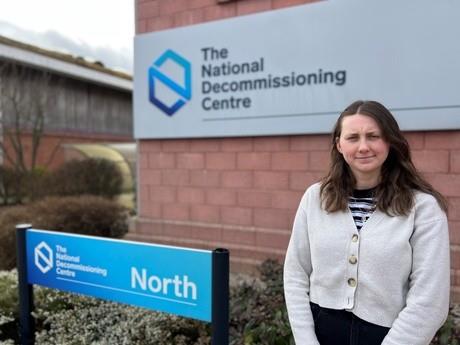
The paper, Understanding the Role of Offshore Energy Structures in Ecosystem Service Delivery: Applying Global Findings to the North Sea, draws on evidence from 18 countries over 42 years and provides a roadmap for future policy and management decisions in the UK and beyond.
Produced jointly by authors from the University of Aberdeen, the National Decommissioning Centre, the Scottish Association for Marine Science and Daryl Burdon Ltd., the research explores how human-made structures alter marine environments throughout their life cycle, from construction to decommissioning. The authors found that the age and location of an installation make a significant difference to whether these structures enhance or undermine ecosystem services.
During the construction phase, increased pressures on the environment often reduce opportunities for people to engage with the marine space, with negative knock-on effects for commercial fisheries, local tourism and enjoyment of seascapes. However, over time these same structures can evolve into thriving reef-like habitats, boosting biodiversity, attracting marine tourism, supporting fish stocks and improving nutrient cycling.
Megan Squire, post graduate researcher at the University of Aberdeen and lead author of the report, said: 'Our findings show that globally, offshore structures hold a significant role in the marine environment and have far reaching influences for society and the economy, out with the supply of energy. The potential value of these structures as ‘artificial reefs’ should be considered when creating and enacting policy around decommissioning in the North Sea.'
The authors encourage the utilisation of a case-by-case approach to decommissioning in UK waters, to preserve select structures that support key habitats and species. The integration of these factors into the decommissioning decision process through a case-by-case approach would allow for the conservation of valuable habitats, whilst still supporting the removal of the majority of structures. A case-by-case approach is commonplace in many other regions, such as the rigs-to-reefs programme in the Gulf of Mexico.
The study uses the internationally recognised DAPSI(W)R(M)* framework to trace the chain from human energy demands to the environmental pressures created and the resulting changes in ecosystem services. This approach, the authors argue, makes the evidence directly applicable to UK policy development, particularly as the North Sea undergoes a significant energy transition.
The paper sets out a series of recommendations for industry and policy makers:
-
Integrate ecosystem service assessments into marine energy policy Policies governing offshore infrastructure - particularly around decommissioning and spatial planning - should reflect the socio-ecological value of these structures across all life stages.
-
Use life-cycle evidence to guide decommissioning decisions Because long-term ecological effects remain poorly understood, especially during decommissioning, policymakers should adopt adaptive, evidence-led approaches rather than default removal strategies.
-
Expand long-term research and monitoring The authors highlight an urgent need for more long-term studies of benthic and fouling communities, which appear to underpin many of the benefits provided by mature offshore structures.
-
Embed ecosystem-service thinking into emerging legislation With new marine and energy policies currently forming, governments have a unique opportunity to acknowledge the cultural, economic and environmental contributions that these structures offer over decades.
With the UK’s offshore energy sector expanding and many oil and gas platforms approaching the end of their operational lives, the study argues that now is a pivotal time for government, regulators and industry. Emerging research reflects this urgency, with the £5.3 million ValMAS project looking at the value of marine artificial structures in the North Sea. Social attitudes to decommissioning are also being explored in the INSITE funded READ-ME project. The authors are involved with the ValMAS and READ-ME projects.
'There is a real policy window right now', added Megan. 'As we plan for net zero, we must ensure ecosystem-based management is at the heart of offshore decision-making. Understanding these structures as both pressures and providers of ecosystem value is essential to getting that right.'
Nicola Beaumont, ValMAS Project Lead, said: 'As the development of offshore renewable continues at pace our seascapes are changing beyond recognition. We know the placement of this infrastructure will have implications for the environment, our society and our economy, but until recently we have known very little about what these implications may be. This piece of research provides a crucial piece of this puzzle, synthesising previous work from the last 42 years and from many countries to better understand the wider impacts of offshore energy.'
The authors are Megan Squire, an Interdisciplinary Institute PhD student affiliated with the School of Biological Sciences and the National Decommissioning Centre; Dr Alethea Madgett, a research fellow at the National Decommissioning Centre; Dr Daryl Burdon, an independent researcher and director of Daryl Burdon Ltd; Professor Beth Scott, of the School of Biological Sciences at the University of Aberdeen; Dr Joseph Marlow, a senior postdoctoral researcher at the Scottish Association for Marine Science; and Dr Kate Gormley, Interdisciplinary Fellow in the schools of Biological Sciences and Geosciences and the National Decommissioning Centre.
We acknowledge the generous support of alumni and friends in establishing the University of Aberdeen’s Interdisciplinary Institute, which enabled this research, including Dr Jane Hellman Caseley (MBChB 1956), Professor Patrick Meares (DSc 1959), Nancy Miller (MA 1942), Norman Robertson, Dr Ian Slessor (MBChB 1956) and Anne Young (MA 1957).
Note:
*DAPSI(W)R(M) is a structured framework for analysing socio-ecological systems, linking human Drivers and Activities to environmental Pressures, State changes, Impacts on human Welfare, and management Responses as Measures.
Source: University of Aberdeen